
The bulk of the incremental profits will come from oil & gas and automobile sectors.

Finance Minister Nirmala Sitharaman on Thursday announced a Rs 11.11 lakh crore spending on infrastructure and vowed to continue reforms as she resisted resorting to populist measures in Modi government's last Budget before general elections, instead choosing to stay on the path of cutting deficit while bolstering measures for focus groups.

'We get an overzealous army of tax inspectors pushing the economy too hard,' says Ajay Shah.
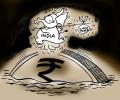
Fitch Ratings on Wednesday said India's high fiscal deficit would pose a challenge in lowering the debt to GDP ratio, which is expected to rise above 90 per cent in the next five years. It said India entered the pandemic with little fiscal headroom from a rating perspective. Its general government debt/GDP ratio stood at 72 per cent in 2019, against a median of 42 per cent for 'BBB' rated peers.

Chief executive officers (CEOs) across sectors have expressed intentions to expand capacities, expecting the government's target to invest a record Rs 11.11 trillion on infrastructure development will act as a catalyst for a jump in consumer demand. "With the government planning a capex of Rs 11.11 trillion, private sector investment will come in a big way. Companies will be preparing for it right from today," H M Bangur, chairman of Shree Cement, told Business Standard. For the past few years, the investment scene in India has been dominated by government capital expenditures; private investments in the manufacturing sector have remained muted.

A careful reading of the national income accounts suggests that after a strong recovery from the pandemic, there has been a significant ebbing of dynamism over the last three quarters to more modest levels recently, note Arvind Subramanian and Josh Felman.

India's gross domestic product product (GDP) growth rate between 2011-12 and 2016-17 should be about 4.5 per cent instead of the official estimate of close to 7 per cent, he said in a research paper published at Harvard University. "The Indian policy automobile has been navigated with a faulty, possibly broken, speedometer," he says in the paper.

Despite the wobble in the markets over the past few weeks, Indian equities remain expensive as measured by several yardsticks. India's market capitalisation-to-GDP ratio, for instance, has touched a multi-year high. The ratio is currently at 116 per cent, based on the FY22E gross domestic product (GDP) number, above its long-term average of 79 per cent.

The RBI's surprise rate hike may have been prompted by its inability to convince the government to cut excise duty on petrol and diesel and take other supply-side measures to tame runaway inflation, sources aware of the central bank's thinking said on Thursday. There has been a record Rs 10 a litre increase in petrol and diesel prices in a matter of 16 days beginning March 22, which has further fuelled the already high commodity prices. The RBI, which is mandated to ensure inflation is under 6 per cent, acted with a 0.40 per cent increase in repo rate to check prices before they went completely out of hand.

The government's Rs 20.97 lakh crore COVID-19 package lacks in addressing the immediate concerns of the economy as the actual fiscal impact of the additional stimulus is only about 1 per cent of the GDP as opposed to the claim of 10 per cent, Fitch Solutions said on Tuesday. Prime Minister Narendra Modi on May 12 announced a stimulus package of Rs 20 lakh crore, or nearly 10 per cent of GDP, to deal with the economic fallout of COVID-19. The contents of the package were broad-based and announced in five tranches.

Indian companies are generating more cash than ever. The net cash flow from listed firms' operations hit a new high of Rs 11.1 trillion in financial year 2023-24 (FY24), crossing the Rs 10-trillion mark for the first time, according to the Centre for Monitoring Indian Economy (CMIE) data going back to 1990-91. The FY24 figure represents a 19.3 per cent jump over the previous year, even as quite a few companies are yet to release their numbers.

The interim Budget proposals that will be presented on February 1 in the backdrop of the general elections scheduled in April/May 2024 are likely to have a hint of populism, believe analysts, but are unlikely to derail the government from its path of fiscal prudence.

'We have essentially tried to set out an agenda for the next five years and it, in essence, represents the political commitment to that agenda.'

A month-long national lockdown to arrest the spread of COVID 2.0 could shave off 100-200 bps of GDP, leading to a 300 bps risk to annual growth, a brokerage report has flagged while expressing doubts over the ability of local lockdowns to control the pandemic. The second wave of the coronavirus inflection has caught the government off-guard with the daily cases jumping over 6.5 times in the past 30 days. With close to 3.53 lakh fresh daily infections, the country is the worst hit globally.

Moody's Investors Service on Tuesday lowered India's GDP growth forecast for the 2020 calendar year to 5.3 per cent, on coronavirus implications on the economy. Moody's had in February projected a 5.4 per cent real GDP growth for India in 2020. This too was a downgrade from 6.6 per cent earlier forecast.

NCAER said the monetary policy measures are unlikely to revive growth at this juncture and suggested providing fiscal stimulus, which too can be challenging unless it can be financed through better revenue generation.

The new numbers did not apparently pass consistency checks with production, inputs, or movements in the National Stock Exchange.

Citing faster-than-expected recovery, rising consumer confidence and the resultant spending spike, Swiss brokerage UBS Securities has revised upwards its growth forecast for the current fiscal to 9.5 per cent from 8.9 per cent in September. The brokerage also sees the economy clipping at 7.7 per cent in FY23 but moderating to 6 per cent in FY24, as it expects the benefit of the low-interest rate regime to end by the end of FY23, and it sees the central bank hiking policy rates by 50 bps in the second half of the next fiscal. The Reserve Bank also forecasts 9.5 per cent GDP growth this fiscal while the average projection ranges from 8.5 to 10 per cent.

India's economic growth surged to 20.1 per cent in the April-June quarter of this fiscal, helped by a low base of the year-ago period, despite a devastating second wave of COVID-19. The gross domestic product (GDP) had contracted by 24.4 per cent in the corresponding April-June quarter of 2020-21, according to data released by the National Statistical Office (NSO) on Tuesday. The government had imposed a nationwide lockdown at the onset of the COVID-19 pandemic last year.

Capital markets are becoming more prominent in India's growth story, with an expanding share in capital formation and investment landscape on the back of technology, innovation and digitisation, according to the Economic Survey 2023-24 tabled in Parliament on Monday. Further, Indian markets are resilient to global geo-political and economic shocks, it added. "Despite heightened geo-political risks, rising interest rates and volatile commodity prices, Indian capital markets have been one of the best performing among emerging markets in FY24," the Economic Survey said.

India's economy grew by 1.6 per cent in the fourth quarter of 2020-21, restricting the full-year contraction to 7.3 per cent, official data showed on Monday. The fourth quarter growth was better than the 0.5 per cent expansion in the previous October-December quarter of 2020-21. The gross domestic product (GDP) had expanded by 3 per cent in the corresponding January-March period of 2019-20, according to data released by the National Statistical Office (NSO).

Stating that growth impulses and the fast-moving indicators are strong, Reserve Bank Governor Shaktikanta Das on Wednesday exuded confidence of the economy clipping at the projected 9.5 per cent this fiscal. Giving all the credit for the faster-than-expected recovery of the economy to the government, Das said the central bank has only been supporting the government in reviving the economy ravaged by the pandemic. Citing a slew of measures the government has taken since the pandemic struck in March 2020, the governor specifically mentioned tax cuts on fuels, tax resolution for the telecom sector, annulling of the retro tax legislation, sale of Air India, plans to sell some of the public sector banks and PLI scheme as the major reforms and growth-drivers bearing fruits now.

India's likely medium-term potential growth will almost certainly be markedly lower than that experienced in pre-pandemic years, warns Shankar Acharya, former chief economic advisor to the Government of India.

'Election funding needs a little more transparency.'
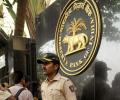
The downward surprise in Q2 stemmed from a stronger-than-anticipated drag from gross fixed capital formation and marginal weakness in private final consumption expenditure. In Q3, projection errors emanated mainly from a steep unanticipated contraction in gross fixed capital formation, which was the deepest in the new series of GDP.

Mortgage finance remains a structural growth opportunity in India with a policy focus on affordable housing, housing shortages, low mortgage penetration, and rising incomes as drivers. Affordable Housing Finance Companies (AHFCs) serve the mass market, low-income segments, which is the least-serviced category, and to operate in this segment, the mortgage provider needs good assessment skills. AHFCs and HFCs have also been increasing exposure in other mortgage segments (loan against property, developer loans among others).

The new IIP series based on the new base year, is expected to lead to better capturing of ground data
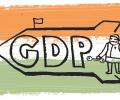
Sectors such as electronics, pharmaceuticals and automobiles can see supply disruptions in value chain, which may lead to a derailment of the domestic economic growth.

It's high time we now turn the popular question on its head -- when there is no growth in jobs for several years, how can the real GDP grow at 7 per cent per annum, says Mahesh Vyas.

With the reality of coalition politics staring the BJP in its face, this was inevitable, points out Ramesh Menon.

Moody's said fiscal measures undertaken by the government -- such as corporate tax rate cuts, bank recapitalisation, infrastructure spending plans, support for the auto sector and others -- do not directly address widespread weakness in consumption demand, which has been the chief driver of the economy. In addition, interest rate cuts by the Reserve Bank of India are not being adequately transmitted to lending rates because of the credit squeeze caused by disruption in the non-bank financial sector, it said.

He argued that if inflation is low, stable and moving towards the 4 per cent target, why has the RBI not revised downward the bank rate fixed in June 2023?

The Indian economy is expected to grow around 10 per cent during the current financial year on the likelihood of fewer COVID-19-linked supply disruptions and buoyancy in the global economy, said Poonam Gupta, director general of economic think-tank NCAER. The real challenge, however, would be to sustain a growth rate of 7-8 per cent in years to come, she said. "We could see annual growth in the ballpark range of about 10 per cent. "The reasons for this perceived optimism are: fewer supply disruptions; increased pent-up demand in the traditional and contact-intensive services; and a buoyant global economy.

The GDP always has a base year, which defines the composition of the economy in that year. As the composition changes, the base year needs to be revised regularly. Abhishek Waghmare explains how that is done.

There has been a significant increase of 50 per cent in global wealth between 1990 and 2010, but it rose by only an "anaemic" 6 per cent during this period if measured in terms of sustainable development.

US's terrible political and economic leadership will ultimately cost the dollar its value. India must act early to avoid being dragged down, suggests R Jagannathan.

Alloting more funds for MNREGA and PM-KISAN could wipe out the entire additional money that the Centre may have for FY25.

'Like every Budget, this time, too, there is chatter around tinkering with the long-term capital gains tax.' 'Investors may not want to jump into the markets until there is clarity on this front.'
The Indian economy is likely to witness close to double-digit growth in the current fiscal year despite the second COVID-19 wave ravaging the country, Principal Economic Adviser (PEA) Sanjeev Sanyal said on Wednesday. The economy is slowly getting back to normalcy as the number of COVID-19 cases is declining, he said while participating in India Global Forum event. "We are probably going to see close to double-digit, if not double-digit (growth) in this financial year," he said.
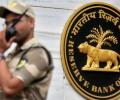
The Reserve Bank of India on Wednesday retained the economic growth projection for the current financial year at 10.5 per cent, while cautioning that the recent surge in COVID-19 infections has created uncertainty over the economic growth recovery. In its last policy review, the RBI had projected a GDP growth rate of 10.5 pc for FY'22. Taking various factors into consideration, it said, "the projection of real GDP growth for 2021-22 is retained at 10.5 per cent consisting of 26.2 per cent in Q1, 8.3 per cent in Q2, 5.4 per cent in Q3 and 6.2 per cent in Q4."
 © 2026 Rediff.com - Advertise with us - Disclaimer - Privacy Policy - Sitemap - Feedback - About us - Terms of use - Grievances